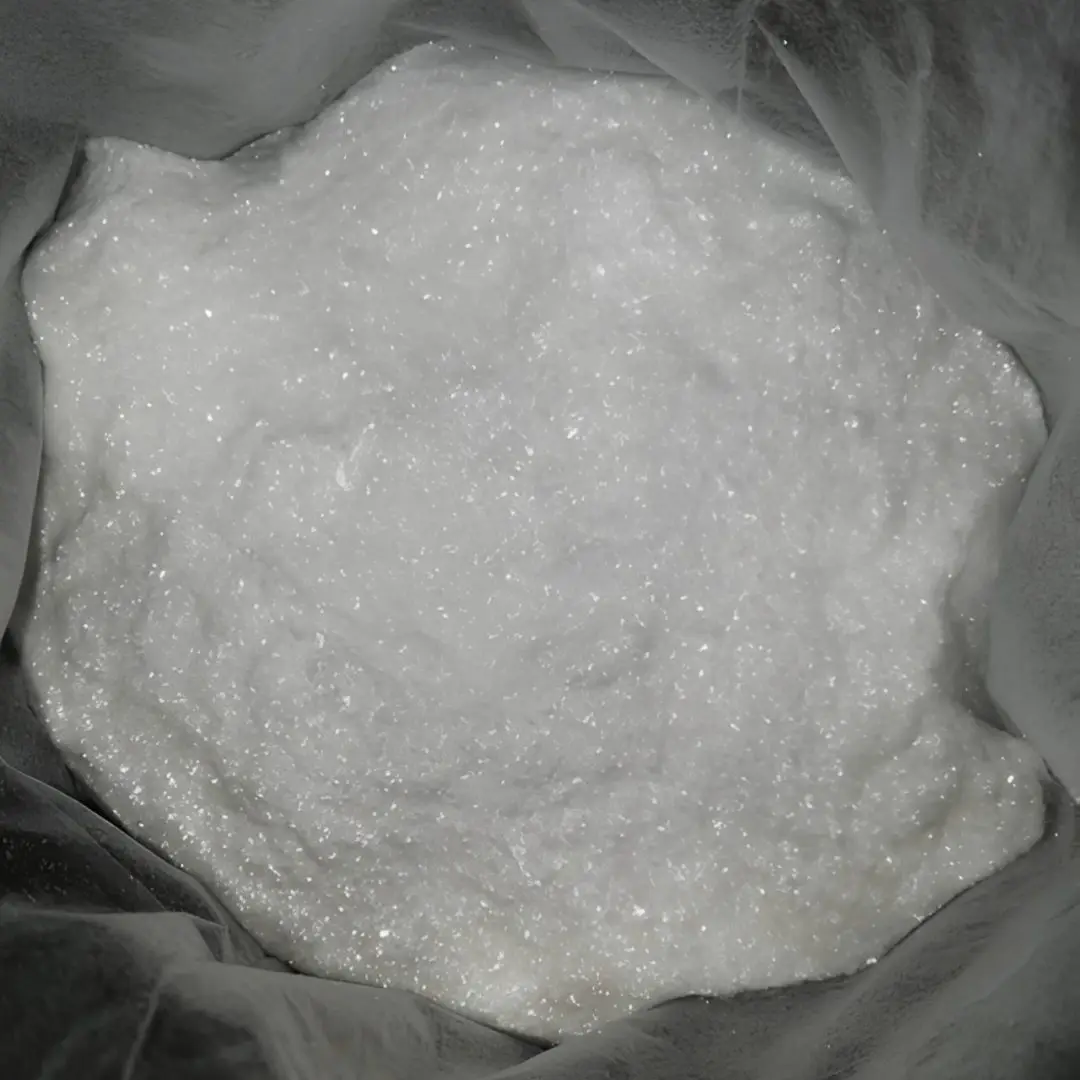
Product Description
Potassium cinnamate is a novel natural food preservative, widely used in medicine, agriculture, and food.
In the food industry, potassium cinnamate is primarily used for the preservation and freshness of foods such as carbonated beverages, fruit juice drinks, canned foods, dairy products, and pickled vegetable products. It is also widely applied in the processing of meat products, including chilled meat, sausages, ham sausages, dried meat, and canned meat, serving multiple functions such as preservation, freshness maintenance, color and flavor retention, water retention, antioxidant properties, and quality stabilization. Potassium cinnamate is also extensively utilized in the production of condiments, pastries, beverages, and other foods, serving as a spice and exhibiting preservative and freshness-maintaining properties. According to the \"Standard for the Use of Food Additives\" GB2760-2014, its usage in beverages, dairy products, desserts, and other condiments should not exceed 0.5g/kg, with specific dosages adjusted within the range of 0.1-0.5% based on different processes.
In the pharmaceutical industry, potassium cinnamate serves as a preservative and bactericide, and also exhibits various biological activities such as anti-tumor, hypoglycemic, and hypolipidemic effects.
Model:
CAS 16089-48-8
As a natural food preservative, potassium cinnamate possesses the following characteristics: 1.1 It exhibits strong broad-spectrum antibacterial activity, particularly effective against molds, bacteria, and yeasts that cause food spoilage. The effective concentration for inhibiting molds is 0.05-0.1%, with a typical usage range of 0.01-0.02%. The effective concentration for inhibiting bacteria ranges from 0.01-0.1%. The main targets of its inhibition also include Pseudomonas, Micrococcus, Bacillus, various genera of Enterobacteriaceae, Vibrio, Halobacterium, Aerobacter, Lactobacillus, Lactic acid bacteria, aflatoxin, Escherichia coli, Proteus vulgaris, Lactobacillus casei, Clostridium butyricum, Lactobacillus gerovicius, Aerobacillus, Gram-negative and Gram-positive bacilli, Clostridium botulinum, etc. Additionally, potassium cinnamate is not limited by pH, exhibiting a considerable antibacterial effect within a pH range of 2-7, and this effect remains consistent despite fluctuations in pH. It can be widely applied in various types of food.
1.2 Safety and practicality: The oral LD50 of potassium cinnamate in rats is 5.58-6.78g/kg, indicating that it is a non-toxic product. After absorption by the human body, potassium cinnamate is converted into phenylalanine, which is metabolized and excreted from the body. A small amount of phenylalanine can be catalyzed by phenylalanine hydroxylase to generate tyrosine, which poses no toxic side effects to the human body. Its effective preservative component, cinnamic acid, was recognized as GRAS (Generally Recognized as Safe) by FEMA (Flavor Extract Manufacturers Association) in 1965.
1.3 The eff