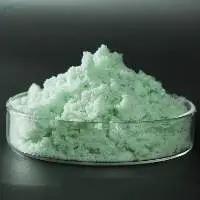
![Ferrous Sulfate]()
Ferrous sulfate, the iron(II) salt of sulfuric acid with the chemical formula FeSO, is a fundamental and important industrial chemical. It is widely sourced as a by-product of titanium dioxide production and steel pickling, finding applications in water treatment, industrial manufacturing, agriculture, and other fields.
Powder: Typically anhydrous or monohydrate. It offers good flowability, ease of transportation, and mixing, making it suitable for water treatment as a coagulant and as a raw material in chemical synthesis.
Granular: Often the heptahydrate form. Granules have higher mechanical strength, excellent flowability, and low dust generation, facilitating dosing and storage. This form is commonly used as a soil amendment and feed additive.
Wet/Moist: Usually a heptahydrate slurry or damp cake from the production process without complete drying. This form is lower in cost and suitable for local use to avoid high transportation costs.
Key Properties
The most common form, ferrous sulfate heptahydrate (FeSO7HO), is known as "copperas" or "green vitriol" and appears as blue-green crystals. It is highly soluble in water, yielding an acidic solution. The compound is chemically unstable and a strong reducing agent, easily oxidizing in moist air to form yellow-brown ferric (iron III) salts.