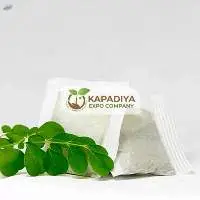
Tong Tji Tea bags.
Available variant Jasmine Tea dip with Envelope (25 tea bags), Jasmine Tea Dip Non-Envelope (25 tea bags), Jasmine Tea Sachet, Jasmine Tea Envelope 100, Black Tea, Black Tea Envelope, Black Tea Envelope 100, Black Tea Sachet, and Green Tea. Product is Manufactured by PT Tong Tji Indonesia.
Indian Herbal Manufacturer & Exporter from India.
Indian Dry Red Chili Manufacturer & Exporter from India.
Teja Chili/ S17 Chili Manufacturer & Exporter from India.
Sanam Chili/ S4 Chili Manufacturer & Exporter from India.
Red Chili Flakes Manufacturer & Exporter from India.
Red Chili Powder Manufacturer & Exporter from India.
Turmeric Finger Manufacturer & Exporter from India.
Turmeric Powder Manufacturer & Exporter from India.
Cumin Seed Manufacturer & Exporter from India.
Cumin Seed Powder Manufacturer & Exporter from India.
Singapore 99 Cumin Seed Manufacturer & Exporter from India.
Europe 99 Cumin Seed Manufacturer & Exporter from India.
Coriander Seed Manufacturer & Exporter from India.
Fenugreek Seed Manufacturer & Exporter from India.
Fennel Seed Manufacturer & Exporter from India.
Black Pepper Manufacturer & Exporter from India.
Cardamom Manufacturer & Exporter from India.
Mustard Seed Manufacturer & Exporter from India.
Curry Powder Manufacturer & Exporter from India.
Bay Leaves Manufacturer & Exporter from India.
Dried Ginger Flakes/ Powder Manufacturer & Exporter from India.
Dehydrated White Onion Flakes Manufacturer & Exporter from India.
Dehydrated White Onion Powder Manufacturer & Exporter from India.
Dehydrated Garlic Flakes Manufacturer & Exporter from India.
Dehydrated Garlic Powder Manufacturer & Exporter from India.
Dehydrated Beet Root Manufacturer & Exporter from India.
Dehydrated Potato Manufacturer & Exporter from India.
Sesame Seed Manufacturer & Exporter from India.
Hulled Sesame Seed Manufacturer & Exporter from India.
Black Sesame Seed Manufacturer & Exporter from India.
Flax Seed Manufacturer & Exporter from India.
Castor Seed Manufacturer & Exporter from India.
Peanuts Manufacturer & Exporter from India.
Groundnut Manufacturer & Exporter from India.
Moringa Powder Manufacturer & Exporter from India.
Moringa Capsule Manufacturer & Exporter from India.
Wheatgrass Manufacturer & Exporter from India.
Ashwagandha Manufacturer & Exporter from India.
Parsley Flakes Manufacturer & Exporter from India.
Thyme Flakes Manufacturer & Exporter from India.
Oregano Flakes Manufacturer & Exporter from India.
Shatavari Manufacturer & Exporter from India.
Psyllium Manufacturer & Exporter from India.
Indian Fresh Red Onion Manufacturer & Exporter from India.
Fresh White Onion Manufacturer & Exporter from India.
Blended with the best India spices, our masala tea bags offer a rich, sharp flavour that will tantalize your taste buds. It can be enjoyed traditionally with milk or as a strong refresher without it.
Stevia is a natural sweetener and sugar substitute derived from the leaves of the plant species Stevia rebaudiana, native to Brazil and Paraguay. The active compounds are steviol glycosides, which have 30 to 150 times the sweetness of sugar, are heat-stable, pH-stable, and not fermentable.
Spearmint, also known as garden mint, common mint, lamb mint and mackerel mint, is a species of mint, Mentha spicata, native to Europe and southern temperate Asia, extending from Ireland in the west to southern China in the east.
Matricaria chamomilla (synonym: Matricaria recutita), commonly known as chamomile (also spelled camomile), Italian camomilla, German chamomile, Hungarian chamomile (kamilla), wild chamomile or scented mayweed, is an annual plant of the composite family Asteraceae. M. chamomilla is the most popular source of the herbal product chamomile, although other species are also used as chamomile.
Mentha is a genus of plants in the family Lamiaceae. The exact distinction between species is unclear; it is estimated that 13 to 24 species exist. Hybridization occurs naturally where some species range overlap. Many hybrids and cultivars are known
Rosa Ã?? centifolia (lit. hundred leaved/petaled rose; syn. R. gallica var. centifolia (L.) Regel), the Provence rose or cabbage rose or Rose de Mai is a hybrid rose developed by Dutch rose breeders in the period between the 17th century and the 19th century, possibly earlier. Its parentage includes Rosa damascena, but it may be a complex hybrid; its exact hereditary history is not well documented or fully investigated, but it now appears that this is not the hundred-leaved (centifolia) rose mentioned by Theophrastus and Pliny: no unmistakable reference can be traced earlier than about 1580. The original plant was sterile, but a sport with single flowers appeared in 1769, from which various cultivars known as centifolia roses were developed, many of which are further hybrids. Other cultivars have appeared as further sports from these roses. Rosa centifolia Muscosa is a sport with a thick covering of resinous hairs on the flower buds, from which most (but not all) moss roses are derived. Dwarf or miniature sports have been known for almost as long as the larger forms, including a miniature moss ross Moss de Meaux
It is a perennial herbaceous plant, with elliptic, obtuse leaves. It grows as a vine or creeper, doing well in moist, neutral soil. The most striking feature about this plant is the color of its flowers, a vivid deep blue; solitary, with light yellow markings. They are about 4 cm (1.6 in) long by 3 cm (1.2 in) wide. Some varieties yield white flowers.
The fruits are 5 - 7 cm (2.0 - 2.8 in) long, flat pods with six to ten seeds in each pod. They are edible when tender.
It is grown as an ornamental plant and as a revegetation species (e.g., in coal mines in Australia), requiring little care when cultivated. As a legume, its roots form a symbiotic association with soil bacteria known as rhizobia, which transform atmospheric N2 into a plant-usable form (a process called nitrogen fixing), therefore, this plant is also used to improve soil quality through the decomposition of nitrogen rich plant material.
Ocimum tenuiflorum, commonly known as holy basil or tulsi, is an aromatic perennial plant in the family Lamiaceae. It is native to the Indian subcontinent and widespread as a cultivated plant throughout the Southeast Asian tropics.
Stinging nettle redirects here. For the Australian plant, see Urtica incisa.
For other plants that sting, see Stinging plant Plants with stinging hairs.
Urtica dioica, often known as common nettle, stinging nettle (although not all plants of this species sting) or nettle leaf, or just a nettle or stinger, is a herbaceous perennial flowering plant in the family Urticaceae. Originally native to Europe, much of temperate Asia and western North Africa, it is now found worldwide, including New Zealand and North America. The species is divided into six subspecies, five of which have many hollow stinging hairs called trichomes on the leaves and stems, which act like hypodermic needles, injecting histamine and other chemicals that produce a stinging sensation upon contact (contact urticaria, a form or contact dermatitis). The plant has a long history of use as a source for traditional medicine, food, tea, and textile raw material in ancient societies.
Highlights
Includes 3 indiviually wrapped cartons with 104 tea bags; 312 tea bags in total
Can be brewed for hot or cold tea
Each tea bag contains 175mg of antioxidants
Finest quality tea since 1879
Common chicory, Cichorium intybus, is a somewhat woody, perennial herbaceous plant of the dandelion family Asteraceae, usually with bright blue flowers, rarely white or pink. Many varieties are cultivated for salad leaves, chicons (blanched buds), or roots (var. sativum), which are baked, ground, and used as a coffee substitute and food additive. In the 21st century, inulin, an extract from chicory root, has been used in food manufacturing as a sweetener and source of dietary fiber
Blended with the best Indian spices, our masala tea offers a rich, sharp flavour that will tantalize your taste buds. It can be enjoyed traditionally with milk or as a pungent refresher without it.
In Laos, (it known as pak i tou, lemon basil is used extensively in soups, stews, curries and stir-fried dishes as it is the most commonly used type of basil in Laos. Many Lao stews require the use of lemon basil as no other basil varieties are acceptable as substitutes. The most popular Lao stew called or lam uses lemon basil as a key ingredient.
Lemon basil is the only basil used much in Indonesian cuisine, where it is called kemangi. It is often eaten raw with salad or lalap (raw vegetables) and accompanied by sambal. Lemon basil is often used to season certain Indonesian dishes, such as curries, soup, stew and steamed or grilled dishes. In Thailand, Lemon basil, called maenglak (Thai, is one of several types of basil used in Thai cuisine. The leaves are used in certain Thai curries and it is also indispensable for the noodle dish khanom chin nam ya. In the Philippines,where it is called sangig, particularly in Cebu and parts of Mindanao, Lemon basil is used to add flavor to Law-uy, which is an assortment of local greens in a vegetable-based soup. The seeds resemble frog's eggs after they have been soaked in water and are used in sweet desserts. It is also used in North East part of India state Manipur. In Manipur, it is used in curry like pumpkin, used in singju (a form of salad), and in red or green chilli pickles. The Garo, Khasi and Jaintia tribe of Meghalaya also use it in their cuisine. The Garos call it Panet (pronounced Phanet). They use it to prepare cold sauce (Ind. Chutney) with added ingredients like fermented fish, chilly, onions sometimes roasted tomatoes.
M. oleifera is a fast-growing, deciduous tree that can reach a height of 10 - 12 m (32 - 40 ft) and trunk diameter of 45 cm (1.5 ft). The bark has a whitish-grey colour and is surrounded by thick cork. Young shoots have purplish or greenish-white, hairy bark. The tree has an open crown of drooping, fragile branches and the leaves build up a feathery foliage of tripinnate leaves.
The flowers are fragrant and hermaphroditic, surrounded by five unequal, thinly veined, yellowish-white petals. The flowers are about 1.0 - 1.5 cm (1/2) long and 2.0 cm (3/4) broad. They grow on slender, hairy stalks in spreading or drooping flower clusters which have a length of 10 - 25 cm.
Flowering begins within the first six months after planting. In seasonally cool regions, flowering only occurs once a year between April and June. In more constant seasonal temperatures and with constant rainfall, flowering can happen twice or even all year-round.
The fruit is a hanging, three-sided brown capsule of 20â??45 cm size which holds dark brown, globular seeds with a diameter around 1 cm. The seeds have three whitish papery wings and are dispersed by wind and water.
In cultivation, it is often cut back annually to 1 - 2 m (3 - 6 ft) and allowed to regrow so the pods and leaves remain within arm's reach.