Fertilizer, cashew nuts , almond nuts , coffee, sisal fiber, yarn rope, tea leaves, watermelon seeds, fresh avocado, fresh mango, fresh pineapple, aloe vera, passion fruits, sunflower seeds, yellow maize, white maize, mung beans, macadamia nuts, pistachio nuts, soybeans, cloves spice, green cardamom, black pepper, white pepper, turmeric finger and powder, coriander, cumin seeds, dry ginger, okra , light speckled beans, red speckled beans, vanilla beans, sesame seeds, dry chili , sunflower oil. cinnamon, almond flour, maize flour, peanuts, sugar beans, white beans, chia seeds, pumpkin seeds, yellow peas, chickpeas, used railways scrap, copper wire scrap, copper cathode, radiator scrap, mica scrap, hms scrap, aluminum extrusion 6063,used engine block , aluminum wire scrap, ubc aluminum cans, lead battery scrap, motor scrap, computer motherboard scrap, mobile phone motherboard scrap, dried mango, dried pineapple, dried banana, dried papaya, dried prunes, desiccated coconut powder
Cashew nuts, wet salted donkey hides, dry donkey hides, almond nuts, hazel nuts, peanuts, pine nuts, coffee beans arabica, robusta green coffee beans, coconut fibre, durum wheat, yellow maize, wet salted cow hides, sisal fibre, black pepper, lentils, pulses, yellow corn, white maize, sisal fiber ug grade, whey protein, optimum whey protein
Cashew nuts, wet salted donkey hides, dry donkey hides, almond nuts, hazel nuts, peanuts, pine nuts, coffee beans arabica, robusta green coffee beans, coconut fibre, durum wheat, yellow maize, wet salted cow hides, sisal fibre, black pepper, lentils, pulses, yellow corn, white maize, sisal fiber ug grade, whey protein, optimum whey protein
Cashew nut, shea butter, almonds, edible palm oil, crude palm oil, pineapple, yam tubers, sweet potatoes, potatoes, cocoa beans, cocoa powder.
griffonia seed, voacanga africana, akuamma seeds (picralima nitida), australian carrots
shea butter, african black soap
White non gmo maize, yellow corn, sunflower seeds
Chia seeds, maize, barley, hay, beans
Cashew nut, ginger, gum arabic, charcoal, sesame seeds, garlic, cocoa, indomie, shea butter,etc
Almond nuts, black pepper, honey, walnuts, cashew nuts, corn meal, fish meal, soybean meal, black raisins, golden raisins, fresh garlic, fresh ginger, red chilli, okra, golden linseeds, green cardamom, green lentils, groundnuts, macadamia nuts, madagascar clove, red onions, sesame seeds, soybean seeds, pistachio, sisal fiber, vanilla beans, green asparagus, white pepper, yellow corn, kidney beans, red beans, speckled beans, white beans, corn oil, soybean oil, sunflower oil, vegetable oil, arabica coffee, robusta coffee, arowana fish, black tiger shrimp, chia seeds, chickpeas, dry anchovy, dry mango powder, fertile duck eggs, fresh color capsicums, fresh brown eggs, fresh brown eggs, fresh habanero peppers, fennel seed, tea, hatching finch eggs, sunflower seeds, fresh onions, black pepper, yellow corn, a4 paper, aluminum scrap, hms, used rails, copper scrap, copper cathode, coltan, natural hazelnut kernels, alternator and motor scrap, iron ore
Black pepper, psyllium husk, nigella seeds, turmeric, erythritol, xylitol, cocos, caraway seeds
Fresh Cut Flowers Like Roses, Chrysanthemums, Gypsy Phillack, Gypsophilla, Carnations, Alstrometia, , Fresh Herbs Like Basil, Mint, Rosemary, Thyme, Dill, Chives, Lavender, Fresh Vegetables Like French Beans, Sugar Snaps, Mangetout, Peas, Chillies, Aubergine
Rwanda garlic, giant
Used cooking oil uco for biodiesel
Palm kernel meal (palm kernel meal), cake, mangrove charcoal
Avocado Oil, Sunflower Oil, Palm Oil, Covid 19 Diagnostic Kit, 3fry Mask, Kf94 Mask, Pomegranate Concentrate, Fruit Concentrate.
Freshly slaughtered beef and mutton, meat, vegetables, fruits, horticultural products
Organic Cold Pressed Amaranth, Sunflower, Baobab, Sesame Oil, White Sesame And Coal
Seeds for planting
Fresh cut flowers, fresh fruits and vegetables, grains, tea, coffee, leather, carvings
Pulses, grains, rice, egyptian white beans, herbs, spices, seeds, birds seeds, dehydrated vegetables, fresh vegetables & fruits, sugar, oils (refined & crude), wheat, flour, meet & poultry
A fruit is a seed-containing structure in a flowering plant called an angiosperm. Fruits are formed after the flowering plant has transitioned from vegetative growth to reproductive growth. In common language, fruits are the fleshy structures of plants that usually have a sweet or sour taste and can be eaten in their raw state. Some of the most consumed fruits are apples, bananas, grapes, mangoes, oranges, strawberries, etc. Some of the botanically classified fruits are usually called vegetables, like Pumpkin, Cucumber, Squash, etc. Broadly, there are two types of fruits- fleshy fruits (Apples, berries, oranges, etc.) and dry fruits (beans, nuts, etc). There are around 2,000 different varieties of fruits available all over the globe. These different fruit types then have their varieties. For instance, Apple alone has approximately 7,500 varieties.
Not only humans, but many animals also consume fruits because it is rich in vitamins, minerals, and fibres. People consume it in processed forms as well, like jams, jellies, juice, etc. There are various types of exotic fruits that are popular for their unique flavours and originate in a specific region. Those are Durian (king of fruits in Southeast Asia), Akebi (Japan), Rambutan (Malaysia), etc. The shelf life of a fruit can be extended by removing oxygen from the place where it’s stored or through refrigeration.
Let’s now look at some unique facts about fruits most people don’t know about:
The international trade market of fruits has been expanding nonstop since the 1980s. China and India are two of the top-producing countries of fruits worldwide. Last year, Banana's share in the total exports of vegetables and fruits rose to 10,7%. It was earlier at 10.5% in 2023 and 9% in 2012. Other than Bananas, India also produces Mangoes and Papayas. At the same time, China is in the lead for its production of Apples and Strawberries. The primary reason for fruits' rising demand in global trade is due to their nutritional value. Not only are they rich in vitamins, minerals, fibres, antioxidants, and other nutrients, but they're also linked to reducing several life-threatening diseases such as cancer, heart disease, diabetes, etc. Along with raw fruits, the demand for processed forms of fruits, such as fruit purees, juices, and snacks, is also increasing at a significant rate. Technologies in the refrigeration, packaging, and preservation areas have also made it easier to trade internationally while maintaining the quality of their product.
Exporting food items comes with added responsibilities. Even a smaller mistake can get the shipment rejected. Hence, it is necessary to maintain the quality as per the requirements of fresh fruit buyers. Here is what they expect:
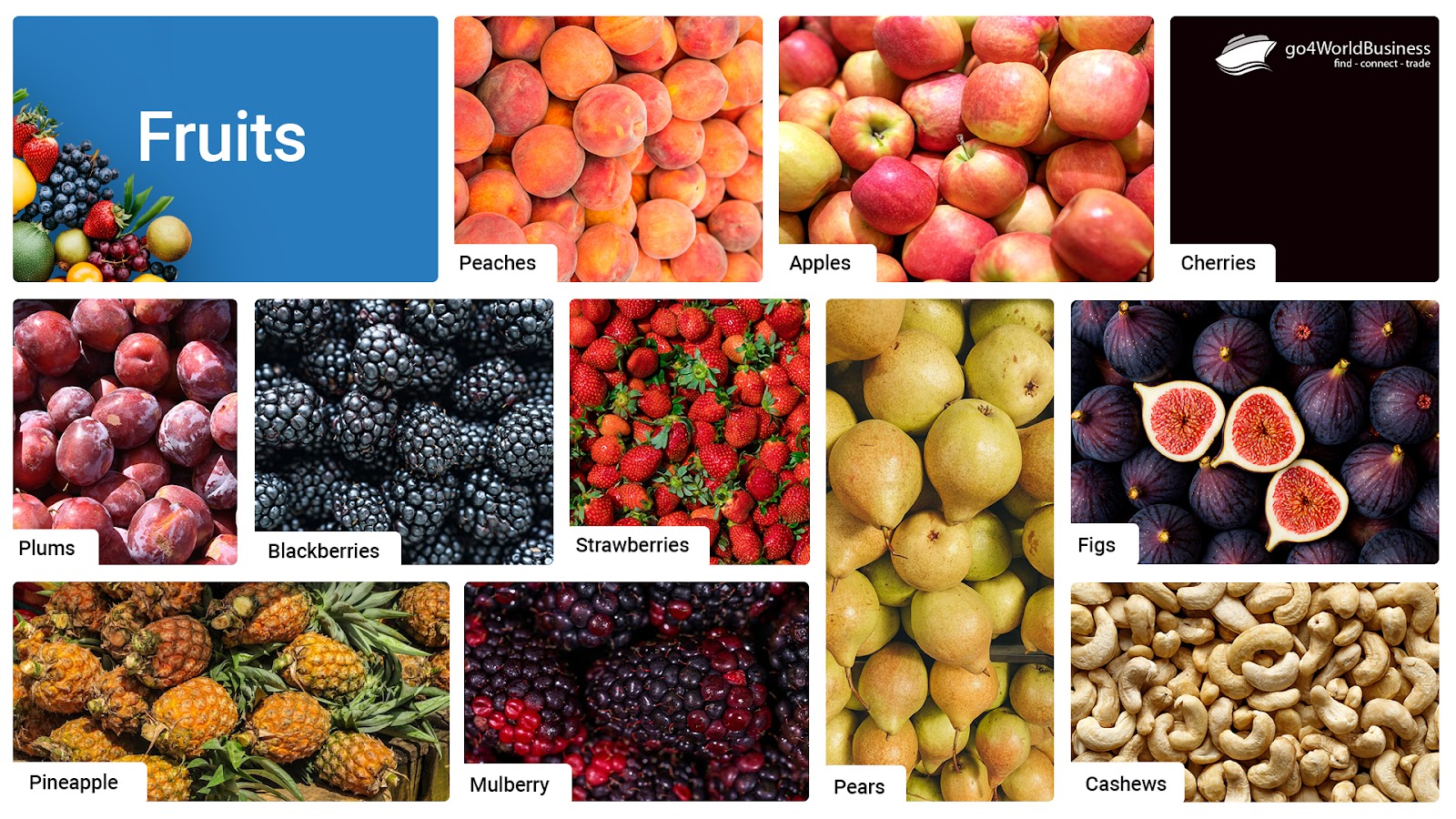
As a supplier of fruits, there are endless varieties which you can add to your exporting business to maintain a steady growth. Here is the list of items you can add:
Having some market insights about the global trade of fruits can help you a lot in understanding your product’s value in the market and then decide fruits price per kg accordingly. Below are some important data points about the fruit market size:
Global Market Size
Source: Statista
Top Importing Countries for Fruits (2024):
Source: Volza
Finding the right kind of buyer is one of the most important aspects of international trading. Let’s look at the different ways you can connect with them via multiple platforms:
Participate in fruit trade fairs like FRUIT LOGISTICA, Asia Fruit Logistica, Fresh India Show, and many others. These exhibitions allow entry to only those buyers and importers who have a genuine business and are interested in trading.
Sign up on B2B platforms, such as go4WorldBusiness. Here, you can connect with fruit buyers in minutes, all of whom have been verified by the internal team. You can also chat with a lot of fruit buyers online in real-time.
Personal connections still go a long way in finding buyers. If you’re an exporter of organic fruits, you can contact the local fruit vendors in your area. They usually have some connections to the international organic fruit buyers. You can also use this way if you have a target of finding “fruit buyers near me”
Start being active on social media sites and LinkedIn. These days, you can connect with a lot of reliable fruit buyers from other countries at these sites. So, make sure that you’re updating your socials every now and then, which will give the impression that you’re actively looking to expand your business.
1. How can I sell my fruit?
You can sell your fruits in multiple ways. If you want to source them locally, then you can target restaurants, local fruits and vegetables markets, and grocery stores. For exporting them internationally, you can sign up at any B2B platform to find trusted fruit importers.
2. Which fruits sell the most?
Bananas are sold the most in the world. This is because of their availability throughout the year, affordability, and multiple nutritional benefits.
3. Which fruit is best for export?
Mangoes (Alphonso and Kesar varieties), Bananas, and Grapes (Thompson seedless) are some of the best fruits for exporting globally due to their high consumer demand.
4. What is the most exported fruit?
The large production of Mangoes, Bananas, and Pomegranates makes these fruits the most exported all over the globe.
5. Which fruit is in most demand?
The demand for Bananas, Mangoes, Apples, Grapes, and Oranges is some of the fruits that are usually high in demand all over the world.
6. How does climate change impact fruit exports?
Fruit exports fully depend on the condition of production. Climate change deeply affects fruit production, as it disrupts the timings of flowering, damages the export infrastructure, and increases the production cost.
7. Is the fruit export business profitable?
Yes, the fruit export business can be highly profitable if you use the right strategy. Targeting high-importing countries, finding buyers through B2B platforms, and maintaining a good quality can significantly increase your profit margins.
8. Which country is the top buyer of fruits?
The US, followed by Ukraine and Russia, is the top buying country of fruits.
9. What is the most expensive fruit in the world?
Yubari King Melon is the most expensive fruit in the world. It is originally grown in Hokkaido, Japan.
10. What is the fruits HSN code?
0810 is the HSN code for fruits. It varies depending on the different types of fruit.
11. What are the key documents required for fruit exports from India?
Some of the key documents required while exporting fruits from India are- IEC, APEDA registration certificate, Commercial Invoice, Packaging list, Bill of lading, Phytosanitary certificate, FSSAI licence, Organic certificate as per NPOP scheme, and others.
12. What are the main export markets for Indian fruits?
The main export markets for Indian fruits are Singapore, Bangladesh, and the US.
13. Which country is no. 1 in fruit production?
China is the top producer of fruits.
14. Which fruit grows faster?
Strawberries and Raspberries are the fastest-growing fruits.
Dragon fruit prices in China have witnessed a significant decline because of low consumer demand. (Full story: Produce Report)