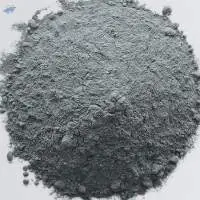
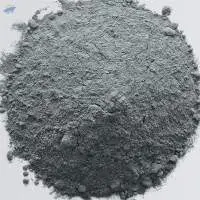
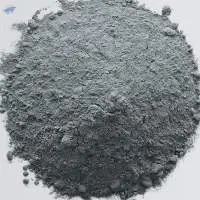
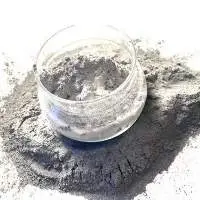
Fly Ash is by product generated during combustion of coal, and comprises the fine particles that rise with the flue gases. Ash which is collected from the bottom is termed bottom ash. Fly ash is collected by electrostatic precipitators or other particle filtration equipment before the flue gases reach the chimneys of coal-fired power plants and together with bottom ash removed from the bottom of the furnace is in this case jointly known as coal ash. Depending upon the type of coal being used, the specification of Fly Ash varies considerably, but Fly Ash contains substantial amounts of silicon dioxide and calcium oxide (CaO), both being endemic ingredients in many coal-bearing rock strata. We are a reputed Fly Ash Exporter based in India and are supplying Fly Ash different cement, ready mix concrete, steel, refractories and construction industries.
The Major Utilization Areas Of Fly Ash :
- Manufacture of Portland Pozzolanic Cement & Performance improver in Ordinary Portland cement (OPC).
- Part replacement of OPC in cement concrete.
- High volume Fly Ash concrete.
- Roller Compacted Concrete used for dam & pavement construction.
- Manufacture of ash bricks and other building products.
- Construction of road embankments, structural fills, low lying area development.
- As a soil amender in agriculture and wasteland development.
Types of Fly Ash:
- According to the type of coal used fly is classified into two types. Anthracite and bituminous coal produces Fly Ash classified as class F. Class C Fly Ash is produced by burning lignite or sub-bituminous coal. Class C Fly Ash has self-cementing properties.
- Class F and Class C Fly Ash are products of the combustion of coal in large power plants. Fly Ash is collected in electrostatic precipitators or baghouses, and then transferred to large silos for shipment. When needed, Fly Ash is classified by precise particle size requirements, thus assuring a uniform, quality product.
- Class F Fly Ash is available in the largest quantities. Class F is generally low in lime, usually under 15 percent, and contains a greater combination of silica, alumina and iron (greater than 70 percent) than Class C Fly Ash.
- Class C Fly Ash normally comes from coals which may produce an ash with higher lime content generally more than 15 percent often as high as 30 percent. Elevated CaO may give Class C unique self-hardening characteristics.
Fly ash is a by-product produced while burning finely ground coal in a boiler to produce electricity. It is removed from the plant exhaust gases primarily by electrostatic precipitators or baghouses and secondarily by scrubber systems. Physically, fly ash is a very fine, powdery material, composed mostly of silica. Nearly all particles are spherical in shape. Fly ash is a pozzolan, a siliceous material which in the presence of water will react with calcium hydroxide at ordinary temperatures to produce cementitious compounds. SiO2, Al2O3, Fe2O3 and occasionally CaO are the main chemical components present in fly ashes.
Fly ash significantly improves concrete performance in different ways and also provides many benefits in cement and non-cement applications. Fly Ash colour can vary from grey and dark grey, yellowish tan and light to brownish.
ADVANTAGES OF FLY ASH IN CONCRETE
Fly Ash is a Pozzolan
Improves concrete workability and lowers water demand
Sulfate and Alkali Aggregate Resistancet
Rise in compressive strength over time
Environment friendly
CEMENTATION Fly Ash is optimized for its fineness while reducing the water demand and improving the chemical compositions to maximise its benefits when used in concrete. Fly-ash can also be used as an add-on to concrete mixture with pozzolanic and/or latent hydraulic properties.
We at CEMENTATION selectively collect fly ash and subject to rigorous testing, further refines these collected materials to produce quality fly ash products meeting the needs of our customers.
- Source: Produced from the combustion of younger lignite or sub- bituminous coals.
- Composition: Contains a high percentage of calcium oxide (CaO), typically more than 20%. It also includes silica, alumina, and iron oxide.
- Properties: Exhibits both pozzolanic and self-cementing properties. The high lime content allows it to harden and gain strength independently when mixed with water.
- Key uses: Used in concrete when early-stage strength development is needed. Its self-cementing properties can allow for a partial replacement of cement in a concrete mix.
- Source: Derived from the combustion of harder, older anthracite or bituminous coals.
- Composition: Primarily composed of silica (silicon dioxide, SiO2), alumina (aluminum oxide, Al2O3), and iron oxide (Fe2O3). It has a low calcium content, typically less than 10%.
- Properties: Possesses pozzolanic properties, meaning it requires a cementing agent like hydrated lime or Portland cement to react with water and form a cementitious compound. It has no self-cementing properties on its own.
- Key uses: Used in concrete to increase its long-term strength, reduce permeability, and enhance resistance to sulfate attacks.
Coal Fly Ash
CFA could be used in huge quantities in two areas: ash dyke construction and low-lying region filling [26,27,28]. In several affluent countries, CFA has been utilized successfully as a structural filler.
We are provide good quality of Ultrafine fly ash material with best rate Guru Corporation has strong position to supply Fly ash at different grades for different usages on a global scale.
a. Name of product. Fly Ash
b. Price of the product. To be discussed with suppliers
c. Product origin - India
d. Key Specifications/Special Features
e. Harmonization System (HS) Code : 26219000
f. Minimum Order Size : 28000 KGS
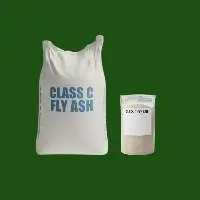
g. Packaging details. Jumbo Bag, Weight. 1400 Kgs