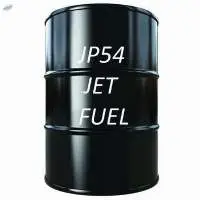
Aviation turbine fuel commonly used in jet engines, known for high energy content, stable combustion, low freezing point, and reliable performance in aviation operations.
JP54, commonly referred to in international commodity trading as Jet Fuel A1 (Aviation Turbine Fuel), is a highly refined kerosene-based aviation fuel designed for use in gas-turbine aircraft engines. It is widely used by commercial airlines, private aviation operators, and military aircraft due to its excellent combustion efficiency, low freezing point, and high safety standards
Safe procedure and long-term cooperation - that is our motto. As an experienced team based in Berlin, with direct contacts to refineries and direct clients, I and my team ensure a smooth procedure.
For us, the customers are the focus of everything we do. To be successful, we need to know what our buyers need.
We want to ensure that we offer our buyers added value with our solutions. We meet our commitments and meet our deadlines and goals.
Send us LOI so that we can start processing the order.
If you have any questions please do not hesitate to contact us!
Aviation Kerosene Jet Propulsion (JP) fuel 54 primarily for military and commercial aircraft. Can be used for power generation, e.g. in gas turbines for electricity production.
CIF Price: Gross USD $94.00 Per Barrel/ Net USD $90.00 Per Barrel
FOB Price: Gross USD $84.00 Per Barrel/ Net USD $88.00 Per Barrel
NSRIC Green Supplies Inc. (NGS) is a trusted, licensed intermediary specializing in the secure and efficient global supply of Aviation Kerosene JP54 Jet Fuel. As a critical energy commodity, ensuring its genuine quality and reliable delivery is paramount for airline operations and military logistics worldwide.
We bridge the gap between verifiable end sellers and credible end buyers, eliminating transactional risk and maximizing profitability. Our established global network and expertise in complex international logistics guarantee a secure, transparent, and profitable trade operation from initial contract to final delivery. NGS manages all compliance, documentation, and procedural steps, offering peace of mind in high-value petroleum trade.
Partner with NGS to bypass unreliable brokers and secure consistent, verifiable sources of JP54 Jet Fuel that meet stringent international specifications. Whether you require CIF, FOB, or other delivery terms, we structure a seamless deal focused on your operational security and long-term supply stability. Contact our trade desk today to secure your volume allocation.
Product Detailed Description:
Aviation Fuel JP54 is a petroleum-based aviation fuel used for aviation fuel trading, bulk fuel supply, airport fueling support, and commercial fuel distribution. It is suitable for buyers requiring aviation-grade fuel products for international supply operations. Atlantic Energies supplies JP54 through trusted supplier networks to meet the bulk fuel requirements of global customers with reliable coordination and competitive pricing.
Minimum Order Qty:
As per buyer requirement / Bulk order basis
Units:
Metric Ton / Barrel
Packaging Details:
Supplied in bulk through tanker vessel, fuel terminal, aviation fuel tanker, or as per agreed delivery terms.
Production Capacity:
As per supplier availability
Country Where Product Is Manufactured:
As per supplier origin / Contract terms
Sample Available:
Yes
Sample Cost Born By:
Buyer
Seller Product Code:
AE-JP54
Product Standards:
International Aviation Fuel Standards / Contract Specifications
Brand:
Atlantic Energies
Model No.:
JP54
HS Code:
271019 / 27101921
Key Specifications
Key Specifications 1:
Petroleum-based aviation fuel supplied in JP54 grade for bulk fuel requirements.
Key Specifications 2:
Suitable for aviation fuel trading, airport fuel supply, and international fuel distribution.
Key Specifications 3:
Supplied according to agreed contract specifications, inspection standards, and buyer requirements.
Key Specifications 4:
Available for bulk supply with FOB, CIF, or CFR delivery terms depending on buyer requirement.
Key Advantages
Key Advantage 1:
Reliable aviation fuel option for bulk buyers, traders, and fuel distribution companies.
Key Advantage 2:
Supplied through trusted supplier networks with smooth coordination and competitive pricing.
Key Advantage 3:
Quality documentation and inspection support can be arranged as per contract terms.
JP54 (Colonial Grade 54 Aviation Kerosene) is a kerosene-type jet fuel specification often associated in trade terminology with Russian or CIS-origin aviation fuel.
Aviation Fuel: Premium-Grade Options for Reliable Performance
Aviation fuels are vital for smooth flight operations, ensuring safety and efficiency in the skies. Our premium-grade options are designed to meet the highest industry standards.
Our Offerings:
JP54 Aviation Kerosene Colonial Grade 54: Trusted for its superior efficiency and reliability.
Jet A-1 Fuel: Ideal for smooth operations of commercial aircraft.
Why Choose Us?
High-quality aviation fuels tailored to meet the strictest global standards.
Reliable sourcing and consistent supply for uninterrupted operations.
JP54 (Colonial Grade 54 Aviation Kerosene) is a kerosene-type jet fuel specification often associated in trade terminology with Russian or CIS-origin aviation fuel.
It is designed for use in gas turbine aircraft engines and is similar in nature to Jet A / Jet A-1, though JP54 itself is not an official universal aviation standard like ASTM D1655 or DEF STAN 91-91. It is typically traded under contractual/specification terms rather than a single global regulatory standard.
Appearance: Clear, bright liquid (colorless to straw-colored)
Density at 15 C: 0.776 - 0.840 kg/L
Flash Point: 38 - 42C
Freezing Point: Max. 40C
Viscosity (20C): ~8.0 cSt
Boiling Range: Approx. 150C - 300C
Sulfur Content: 0.3% mass (varies by source specification)
Net Specific Energy: ~18.4 MJ/kg (lower than standard Jet A ~42 - 43 MJ/kg as per some trade claims, though values vary in literature)
Smoke Point: ~19 mm
Naphthalene Content: 3% volume
Aromatics Content: ~22% volume
Cetane-type performance (not primary aviation metric): Not typically defined for aviation kerosene
Type ; Kerosene-type aviation fuel
Appearance : Clear to straw-colored
Density @ 15C : Approximately 775 - 840 kg/m
Flash point : 38C
Freeze point : 47 C
Total sulfur : Typically 0.30% mass
Aromatics : 25% by volume
Distillation endpoint ; Approximately 300C
Net heat of combustion : Approximately 42.8 MJ/kg
Water : Controlled to aviation-fuel specification
Corrosion : Must meet specification
Thermal stability : Must meet specification
Contaminants : Must meet specification
Aviation Jet Fuel is a type of aviation fuel designed for use in aircraft powered by gas-turbine engines. It is colourless to straw coloured in appearance. The most commonly used fuels for commercial aviation are Jet A and Jet A1, which are produced to a standardised international specification. The only other jet fuel commonly used in civilian turbine-engine powered aviation is Jet B, which is used for its enhanced cold-weather performance.
Jet fuel is a mixture of a variety of hydrocarbons. Because the exact composition of jet fuel varies widely based on petroleum source, it is impossible to define jet fuel as a ratio of specific hydrocarbons. Jet fuel is therefore defined as a performance specification rather than a chemical compound.
Aviation Jet Fuel is commonly referred to as JP54. However, this is the wrong terminology as there is no such grade of Jet Fuel. Jet A and Jet A1 are what refineries offer. Aviation Jet fuel Gas is what powers turbine aircraft engines. Worldwide, Jet Fuel is the most used low Sulphur content Kerosene. For instance, Colonial JP54 is similar to Jet A except the energy is 18.4 mj/Kg compared to the 42.8 MJ/kg of Jet A. Most importantly there is also a slight difference in additives.
Aviation Jet Fuel B is used for its extremely cold weather performance. However, aviation Jet fuel Bs lighter composition makes it more dangerous to handle. For this reason, it is rarely used except in very cold climates. A blend of approximately 30% Kerosene and 70% Gasoline. Because of its very low freezing point (60 C (76 F), it is known as a wide cut fuel and has a low flash point as well. Aviation Jet Fuel B is primarily used in some military aircraft. In Canada, it is also used because of its freezing point. Aviation Kerosene standards are published as GOST10227-86. The standard consists of different properties. It separates paraffin and gasoline in the refinery.
Military organisations around the world use a different classification system of JP (for Jet Propellant) numbers. Some are almost identical to their civilian counterparts and differ only by the amounts of a few additives. For instance, Jet A1 is similar to JP 8, Jet B is similar to JP 4. Military fuels are highly specialised products and are developed for very specific applications. Jet fuels are sometimes classified as kerosene or naphtha type. Kerosene type fuels include Jet A, Jet A1, JP 5 and JP 8. Naphthatype jet fuels, sometimes referred to as wide cut Jet Fuel, including Jet B and JP 4.
Aviation Kerosene Colonial Grade 54 Jet Fuel JP 54: Jet fuel A-1. Jet fuel designed for use in aircraft powered by gas-turbine engines. It is clear to straw-colored in appearance. The most commonly used fuels for commercial aviation are Jet A and Jet A-1 are produced to a standardized international specification.
JP54 powers gas turbine aircraft engines. Jet A and A-1 have specifications that can be used in fuel worldwide. Jet B is used in cold weather elements. Commonly a number of different mixtures make up jet fuel and this relates to flash points and how the carbon numbers are distributed.
MOQ: 10,000 Barrels per Month
Supply Ability: 1,000,000 Barrels per Month
JP54 Technical Specifications:
ADDITIVES
Antioxidant in hydro processed fuel mg/l min 17 max 24 Antioxidant non hydro processed fuel mg/l max 24 Static dissipater first doping ASA- 3 mg/l max 1 Stadis 450 mg/l max 3
COMBUSTION PROPERTIES
Specific energy, net mi/kg min 18.4 D 4808 Smoke point mm min 19 D 1322 Lumininomitter number min 45 D 1740 Naphtales % vol max 3 D 1840 Propriety unit min max result test ip method ASTM
COMPOSITION
Total acidity mg KOH /g max 0.01 354 D 3242 Aromatic % vol max 22.0 158 D 1318 Sulphur, total % mass max 0.30 107 D 1266/2622 Sulphur mercaptan % mass max 0.003 342 D 3227 Doctor test 30 D 4952
VOLATILITY
Initial boiling point centigrade max report 123 D 96
10% vol at C 240
20% vol at C report
50% vol at C report
80% vol at C report
End point centigrade max 42 170/303 D 56 / 3828 Density at 15 C kg m2 min /max 776/840 180/385 D 1298
LOW TEMPERATURES PROPERTIES
freezing point centigrade max 40 15 D 1298
Corrosion copper (2hrs at 100 C)
Corrosion silver (4 hrs at 500C) max 1 227
STABILITY
Thermal stability control temp. 280C 323
Filter pressure, differential mm. Hg max 25
Tube deposit rating (visual) max <3
CONTAMINATION
Existent gum mg/100 ml max 7 131 D 361 Water reaction, interface rating max 16 258 D 1084 Fuel whit static dissipater additives min 75 D 3648 Fuel without static dissipater additives min 85